Really Good Writers Sometimes Write Not-So-Good Material

Working on some fairly big features and television shows over the years, I’ve noticed an interesting but often overlooked occurrence. That of otherwise good writers putting out some truly wretched material.

Sometimes it’s too many chefs in the kitchen. We’ve all seen laundry list credits with scores of writers and story editors, all chipping in their two cents worth, but once in a while there’s the opportunity to observe a single writer’s “shooting script” of remarkable crappiness evolve into a dozen or so revision scripts, also of remarkable crappiness. Let me tell you, it can be pretty impressive, and I don’t mean that in a good way.

Recently I had the opportunity to take a gander at some of the clunkiest dialogue I’ve read in years. I’m talking burn the script after 10 pages bad. Instant PASS bad. How does this person have a job writing bad. The twist is, this writer has previously penned a bunch of things I really enjoyed in the past. Apparently this particular assignment just wasn’t in their wheelhouse. I was torn, I wanted to like their work, but holy crap I just couldn’t.

And that’s the thing I began thinking about. Even seasoned pros sometimes blow it big time but keep getting a free pass. This fact really doesn’t do much for us aspiring screenwriters, once you’re established you can fail pretty spectacularly and still get work, but the takeaway for me at least is that a good many of us have quite likely written things objectively better than some seasoned pros. Will that knowledge get any of us work? Of course not. Can we keep that tidbit tucked away for those rainy days when we feel like our work just isn’t up to snuff and want to give up in a fit of frustration and foot stomping while howling at the moon in an angry tirade like a frustrated child with a bad case of colic? You bet your run-on sentences we can. (and that was a painful one to write).

I’m really just posting this as a little pep talk, an incentive to fellow writers, an objective bit of info that sometimes it’s not about the material as much as the connections and name you’ve built up.

Frustration happens and we all have self-doubt sometimes, just don’t let it stop you from writing.

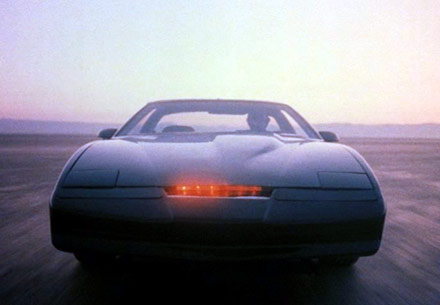
Knight Resurrected: Knight Rider Reboot 30 Years Later

KITT2000

No article today, just a quick self-serving blurb.

I just posted Knight: Resurrected to The Black List. I rather enjoyed this one, the story of a teenager who unwittingly rescues a long-lost artificially intelligent supercar.  The two become friends and ultimately wind up facing enemies from long ago.  Sort of E.T. meets Fast and Furious in a way.  In any case, if you’re on The Black List, give it a gander, I’d love to hear your thoughts.

Productive Screenwriting – Avoiding 1st Draft Pitfalls

Pitfall!

Pitfall!

First off, I’m sure I’m going to piss off a few ‘experts’ when I say this, but it is my sincere belief that there really is no right or wrong way to write. For the most part at least. A screenplay consisting entirely of page-long run-on sentences would be pretty horrible, though someone may write one some day and prove me wrong.

postitoutline

Outlines and idea notes are the most common tool for laying out the basics of a story before you get to the actual writing of it. Some may write meticulously detailed outlines while others (myself included) prefer a more basic outline of the key themes, characters and ideas and what order they’d work well in. There are myriad programs to help with the process, or you can do it the old-fashioned way with cards or Post-it notes.

As old-school as it may be, I actually like using Post-its as I can quickly move scenes around on the large wall mirror I use, allowing me to see every scene and descriptions of it with just a single glance. I use different color notes for different times of day to more easily visualize that aspect of the story. Some find it easier to switch pages on a computer screen, and the ability to take that with you via laptop is certainly an advantage, but physical cards are kinetic and I find them more conducive to creativity (for me). I also prefer to do the core of my writing in one place, so the need to move my Post-its doesn’t typically arise.

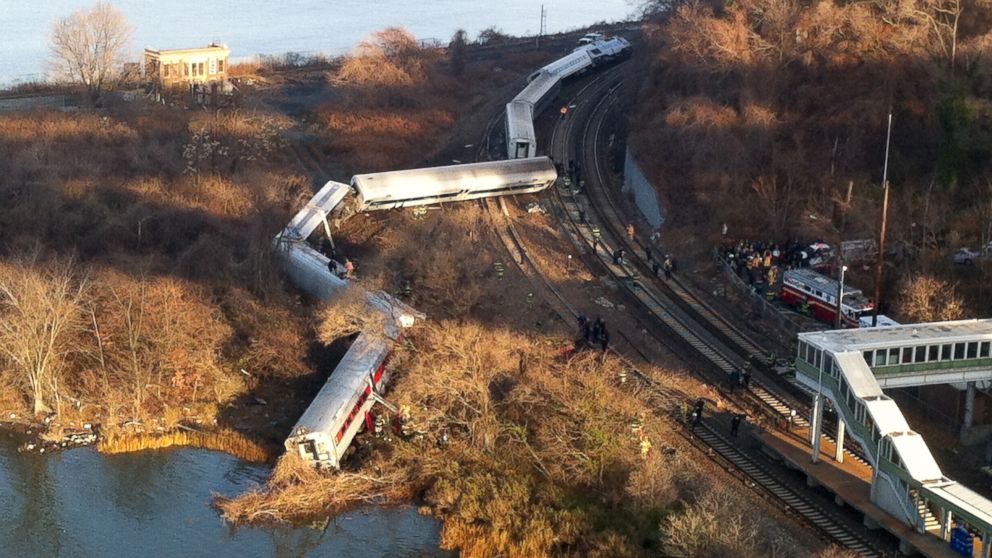
AP_NYC_train_derailment_jt_131130_16x9_992Others utilize a Train of Thought method, opting to go with the flow and see what comes of it. While this can be a fun way to write, it does tend to lead to a lot of revisions as completion more often than not follows a very windy road rather than a sleek expressway. Anyone who has decided to “just write” with no plan and see where it goes likely has the same story we’ve read time and again, the one with their train of thought derailing like an Amtrak traveling in a straight line (and why is it rollercoasters stay on track but Amtrak seems to flip with nary a curve in the line?) Writers who do this often send their formerly interesting characters on random side trips that ultimately detract from the story.

These exercises in tangential writing often lead to some interesting ideas that may ultimately find a place somewhere, perhaps in a later creation, but the story at hand most often becomes a jumbled mess in need of serious revision. Having a plan, even the most basic one, helps you stay on track and not waste days or weeks chasing the dragon of new ideas that don’t fit in the concept of what you set out to write.

200474875-001Then there are the Meticulous Rewriters. You know who you are, the ones who edit as they go, unable to leave a sentence on the page unless it is perfect. We’ve all been guilty of it at one time or another, getting so wrapped up with making every single word count that we don’t see the forest for the trees. Unfortunately this leads to what I call Hitting the Perfection Wall, where one imperfect sentence can bring an unfinished script to a screeching halt. Quality writing and the exquisite turn of a phrase are certainly ideals to strive for, but that is not what anyone should be focusing on in their first draft unless they want to be one of those writers who puts out one completed work every few years or so. Over-correcting and constant tweaking/editing can derail actual writing. Get that first draft written, you can edit and tweak to your heart’s content once that is accomplished.

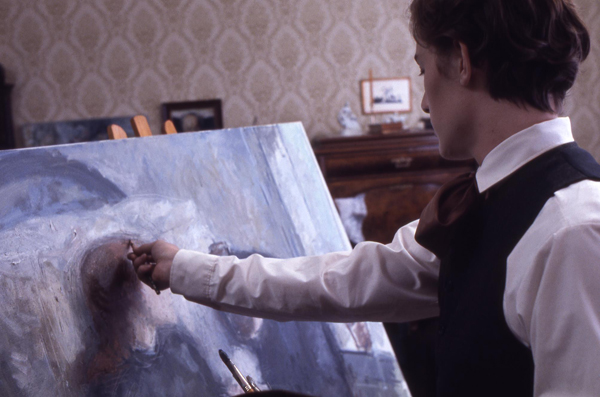
edvard munch1Like a painter creating a body of work for an upcoming exhibit, sometimes you have to put a piece aside and stop tweaking it or you’ll have nothing to show but just one piece that’s never finished. Crank out a body of work and you’ll have a lot of things to revisit and rewrite.

Now in the sea of tips, tricks, and advice out there (mine included) there are many methods that may work well for your particular style. Experiment, try things out, just keep in mind that no matter a blog creator or writing expert’s credentials and bona fides, you don’t have to conform to someone else’s structure if it doesn’t work for you. Some people swear by Save the Cat, others abhor it. Choose what works best for you.

In the quest for a great story, I am certainly guilty of leaving drafts unfinished, though that typically stems from working 60 to 70 hour weeks on set in my “day job”, leaving little brain power to write. This is why I carry notepads, rapidly filled full of outlines, ideas, dialogue and scenes that I hope to have time to fully explore during a break. One such notepad became my Knight Resurrected screenplay first draft in just 5 days during the downtime between shows. For me the outline first then write process works well. But don’t take my word for it, I’m just a guy on the internet, giving my 2 cents worth.

One un-related bit of advice:

Don’t be ashamed to say “I’m a writer.” There’s a lot of negativity placed on saying “I’m an actor/musician/writer/artist” if you aren’t successful yet, but just because you might not be in the .0001% who make a living at it does not lessen or invalidate what you do. I tell people I’m a writer, albeit unproduced, who also works below the line, though I’d prefer to write for a living. There’s no shame in a day job. Very few people make a living from their artistic endeavors, and several amazing artists I know still work other jobs when not selling paintings for thousands of dollars. A paycheck doesn’t define you.

Now go write!

Screenwriters Must Always Follow The Rules! (Except When They Don’t)

Never give camera direction.

Don’t say “We see.”

Cut out those graphic descriptions.

Oh, and don’t forget to always use well-crafted sluglines.

These are just a few of the oft repeated rules spouted by bloggers, gurus, and countless “experts” the world over, but if you read some of the top scripts floating around out there, you’ll see these rules (and many others) ignored all the time. In fact a great deal of the “rule breakers” spurned so often online wouldn’t even raise an eyebrow amongst actual execs.

Take for example the recent film “The Imitation Game” by Graham Moore. In the first several pages he throws bolded sluglines out the window, opting instead for a very dynamic (if not conventional) style. Rather than traditional sluglines, here is what he wrote:

A CONSTABLE PHONES IN the robbery to headquarters —

— At headquarters, a RADIO GIRL transmits the information to the detectives on duty —

— And in London, a RADIO OPERATOR in a dark room far below Victoria Street TAKES DOWN AN URGENT MESSAGE —

— ON THE MESSAGE: Random letters. Gibberish. It’s ENCRYPTED.

The ENCRYPTED MESSAGE is handed to a CRYPTANALYST, who DECODES it —

— Before the MESSAGE is HANDED OFF and WHISKED through the dim hallways —

— Until it’s finally deposited on the desk of STEWART MENZIES, the Director of MI-6. British Secret Intelligence Services.

Menzies picks up the message: “Alan Turing has been robbed.”

EXT. ALAN TURNING’S HOUSE – MORNING

Another example comes from the Nightcrawler script. Once again, sluglines are eschewed for an unconventional (according to internet gurus at least) style. These breaks shift focus intentionally to what the writer wants the shot to be, but without giving explicit camera direction (though the writer was also the director). Even so, you very clearly see where the writing forces you to visualize the focal point of the images as you read. Take a gander:

PEOPLE

riding bikes and jogging and roller-blading in Venice where we find

LOU

sitting on wall … watching

A MAN

in a spandex bicycle outfit as he locks his racing bike, enters a juice store and

LOU

crosses … picks the bike lock and CUT TO

A PAWN SHOP

You get the idea. Now as I said, the screenwriter was also the director, so liberties are expected.

As far as the use of “We see” or other camera direction, everyone I’ve ever spoken with who actually works in the industry (as opposed to myriad online gurus and experts who are more often than not not making their living as writers) have said that if a script is well written and engaging, they really don’t care if there is camera direction. The point is to tell a good story, and if you’re doing your job as a writer the story should be so enthralling that they don’t even stop to notice visual cues and direction.

This is one of the interesting elements (in my opinion) of the online world of experts and coaches. I wonder how many people have changed their dynamic and engaging reads on the advice of people whose credentials are minimal at best. There are literally thousands of writers who have completed scores of screenplays, but the act of writing a body of work alone should not be enough to give anyone the title of expert. Of course there are those who are like great coaches, perhaps not able to do it themselves, but possessing a keen eye towards improving other people’s creations. An old friend of mine is this way. She’s a lawyer by trade, a stage actress by hobby, and is utterly amazing at picking apart a story and finding strengths and weaknesses. She is also the first to say that she can’t write worth a damn, but she can edit with the best of them.

The takeaway from this all is these rules aren’t rules at all, but rather suggestions or guidelines. Do what you need to do to make your story flow. Just remember that if you do venture outside of conventional style, make sure you do it elegantly and effectively. You can get away with just about anything if you do it really well.

The Value of Friendly Critiques, Script Doctors, and Story Coaching

Some script doctors are amazing at what they do, possessing an almost uncanny ability to cut to the chase and highlight what works and doesn’t in a story. An old friend of mine has this ability, though she is not in the industry, rather working as an attorney these days (but with a solid theater background). She’s fond of saying, “I can’t write to save my life, but I can dissect a story like nobody’s business.”

Those who can, do. Those who can’t, teach, but our industry may be one of the more notable exceptions to that rule.

I’ve read a lot of aspiring writers rant about having a script doctor review their work only to discover that person has not produced or optioned work of their own. While in many industries you need to have that sort of accolade in your CV to be considered an expert, in the writing game the amount of people with that type of success is miniscule given the quantity of writers out there. Literally thousands upon thousands of scripts are written in L.A. alone every year, but how many do you ever hear about? And of those, only a handful will ever be optioned or win the Nicholl or Page, but that doesn’t mean the other submitting writers lack talent. Some are exceptional, their work just may not have been to that particular reader’s taste on that particular day. In the non-contest world I think it translates to sending out a great script that unfortunately just doesn’t make it to the right desk. It’s a daunting task no doubt, and as we know this business is certainly as much about connections and relationships as the quality of your work.

Is it worth paying for a bit of outside critique?

At a certain point most people of the creative sort wish for some external feedback on the work we’ve poured hours, weeks, or months of effort into. However good or bad the reception is by our friends and family, an objective outside opinion can be quite beneficial, especially if you are open to critique and can read negative points with an open mind. Even coverage that you don’t agree with will most likely hit on a point or two that have validity. The hard part is putting ego aside and being willing to consider that your baby you’ve been tirelessly working on for months on end may not be the perfect and unique snowflake that you believe it to be. That’s why you pay for that outside opinion. Friends may be reluctant to be totally blunt, but a stranger has no such problem.

That said, I  feel writers should have faith in their work and not take a set of script notes as a simple checklist of what to fix or change to make your story great. Guess what, your script may be amazing as-is and changing things per those notes might work great for that one particular reader but may also diminish the work for the larger audience. This is where we need to take a step back and digest the critique, then revisit our work with fresh eyes at a later date to better see if the points have merit. It’s like that trick when writing an angry email, you know the one where you draft it but don’t send it until later. It feels great to get it out of your system, but if you come back to it the next day you’ll almost certainly be glad you didn’t send it and will have a plethora of ideas (no, not piñatas) to make it better.

Now some writers want to keep their Precious safe from outside eyes, choosing rather to hold it close and tight. As for me, I personally like to get as many eyes as possible on my work. Sure, some critiques are great, some not so much, but every single reader, even those I disagree with, has given me something to think about as I walk the road to bettering my writing.

Scottish Foxes and Posh Superheroes

Inspired by a conversation with my Scottish friend Gillian, here’s an odd little short story I whipped up for shits & giggles following a late-night chat that somehow devolved into a bizarre conversation about posh superheroes and rebel foxes.

Those Damned Foxes

A pack of slender shapes darted through the shadows of the small London suburb, tails held high in the air, ears pointed and alert. The foxes were on edge as they quietly scurried through the streets, clamoring and nosing their way into whatever nooks and crannies they could fit. An open window here, an unattended gate there, and perhaps once in a while, even a door opened by a mysterious gloved hand, wrist cuffs fraying from wear and years of nipping fox bites.

The hungry canines spread out in all directions, searching the homes they found accessible, noses twitching at a hummingbird pitch, scavenging for any scrap of food. “So Hungry” they all thought in unison.

Some of the foxes were stealthy in their nature, and those were the select few most likely to survive the night’s ordeal, spiriting away to the countryside whilst clinging to the shadows if they were lucky. Others were less cautious, their hunger making them reckless in their decisions. Occasionally one even took an ill advised taste of a sleeping human child, though not for desire of eating it but rather to lick clean the sticky remnants of jam and scones smudging the young one’s hands and cheeks, the raspy tongue waking the youth to the unexpected sight of a furry face and bright white teeth.

Screaming most typically comes next.

Parents, naturally, do not appreciate this.

They dislike it so much in fact that they chased the foxes with brooms and sticks, yelling angry oaths whilst sending the furry intruders fleeing into the night.

A shabby man in a well-worn mackintosh watched it all happen from the shadows as he leaned against his pristine van. He checked his watch,, then closed the rear door to his van and slowly climbed back in, starting the engine with a quiet cough before heading off down darkened streets.

In his wake the townsfolk had taken to the streets, yelling and hollering while chasing foxes from their doorsteps. “Out you damn vermin! Out I say!” shouted a blubbery man wearing an enormous mustache but not much more as his mass jiggled from his porch.

“Mr. Olsen” exclaimed his elderly neighbor, “What ever are we to do about these horrible foxes?”

“I think there’s only one thing we can do Mrs. Smith.” With that he picked up his telephone and dialed a 3-digit number. “Yes, hello? I’m afraid we have a fox problem, it’s really quite out of hand. Do you think they’d be able to find time to come help us common folk?” he asked into the handset. “Yes, of course, we’ll light it right up. Thank you so much.” The man turned, looking up the road, calling to a young boy watching the commotion from his window. “Tommy,” the man called out, “light it up, they’re willing to come to our aid.”

Tommy shut his window with a bang, then stepped out of his house, scurrying up the street at a quick run, dodging foxes as he went. Moments later a loud metallic clanging could be heard as faces appeared in windows.

“Oh, is someone lighting it?”

“Are they really going to come?”

“I hope I can get an autograph!”

The sky flickered for a moment as the enormous light came on, a massive image of a bugle clearly emblazoning the sky.

“It’ll only be a matter of time now” said Mrs. Smith, “I think at last we can all breathe a sigh of relief.”

Back in the stables on their 300 acre estate (the small Summer parcel they sometimes gathered at), The Posh Crusaders sipped their tea and nibbled on finger sandwiches as they gazed up at the sigil lighting the sky.

“Well, it’s about time.” Said Sir Richard Excellent Dibbley. “Damn plebs have kept us waiting for hours already.

The van pulled up and the shabby man approached. “Sir,” he said, “forty-seven foxes on the High Street as instructed.”

“Thank you Henson, that will be all for now.” Replied Sir Richard. “Alright team, it’s time to remind those commoners why the aristocracy shall always prevail. Lord Hamish Amazing MacKay nodded his approval.

“Very well Sir Excellent, let’s be off then. Lord Fantastic, Dame Incredible, gather the others, we ride in 10 minutes!”

The townspeople peered anxiously through the streets as shapes flittered in the dim light, both people and foxes alike, when a sharp bugle cry cut through the night. “It’s them, they’re coming!” shouted young Danny Fay. And sure enough, they were indeed coming.

The Posh Crusaders were a sight to behold as they slowly rode their enormous steeds down the street, black boots glistening in the pale moonlight, white pants crisp and clean, red coats blazing on their backs. Acutely aware of the eyes on them, they held themselves with the air of the elite, of the ruling class, of the aristocracy.

Sir Excellent scanned the scene and spoke. “Citizens. Commoners. You have called for our assistance and we are now come in your hour of need. He paused, allowing the common people to take in the sight of his majesty.

You sir,” he said, pointing at Mr. Olsen, “where are these scurrilous vermin from which you are in such dire need of rescuing?

Mr. Olsen pointed and stammered an incoherent reply, so glad was he at the sight of the Posh Crusaders.

Sir Excellent gave him a quick nod, then turned to his snooty compatriots.

“Crusaders, ride!”

A blare of bugles filled the night air, followed by the yowling of the Aristo-Hounds as they ran down the streets and alleyways, barks bouncing off the walls, echoing this way and that. The mounted heroes, though lacking capes (Lord Amazing had once floated that idea but it was voted down faster than the spandex unitard suggestion from Lady Stupendous) galloped forth to their task, and in a short but bloody frenzy the neighborhood was soon cleansed of the horrible fox menace.

The air had taken on a calmer feel, and Henson loaded the dead foxes into his van while The Posh Crusaders signed autographs and took pictures with the commoners. “Who do I make it out to?” asked Lord Amazing, the star-struck girl looking at him in awe.

Finally “Crusaders, mount up!” called Sir Excellent.

Once more astride their mounts, the heroes turned and rode off, but not before heartily shouting out, “Long live the aristocracy!” to which the grateful townsfolk replied in kind, “Long live the aristocracy!” and applauded as their saviours rode off into the night.

Back at the estate, Sir Excellent stood at the wash basin in the stables, dabbing specks of fox blood from his gloves.

“Forty four of the forty seven this evening Sir.” Said Henson.

“Only three missing this time? Not bad. Next week let’s make it an even fifty, shall we Henson?”

“Indeed sir, I’ll inform the kennels.”

“The people will always need the aristocracy Henson” Sir Excellent said to himself, admiring his strong jaw in the mirror. “It’s the natural order of things.”

“Yes sir, right you are sir.

In a small dugout on the outskirts of town, three weary and filthy shapes slithered into a gap between some boards, entering a long shuttered factory.

Suddenly a bright light shone down upon on them and a harsh voice barked out, “Password!”

The dazed foxes quickly gathered themselves, standing straight. “Bannockburn!” they replied in unison.

The spotlight went out, replaced by a dim glow illuminating the cavernous ruins. As their eyes quickly adjusted, the three saw their fox brothers and sisters in great numbers from floor to rafters. In fact they’d never seen this many foxes in one place, not even in the Posh Crusaders’ secret kennel.

One particularly large and grizzled fox padded over to them, sniffing their tails. “Good” he said, “Very good indeed.” The newcomers looked at him, curiosity in their eyes, but also a tinge of fear. This fox had an air of something different about him. Ah yes, an Alpha.

“The humans are getting more careless, soon our numbers will be great enough to reclaim what’s ours.” Said the burly fox.

“Can it be possible?” asked the youngest of the three newcomers, “we’d heard rumor of this place, but never imagined there were so many.”

“Och m’lad, it’s more than possible.” He paused. “Lights!” The room was suddenly illuminated and the three were astounded to see there were far more of their kin than they’d thought could possibly exist, let alone be in the same place.

The rugged old fox looked them over once more and flashed a toothy grin, nodding his approval of his newest recruits. “They call me Borlum” he said, “Welcome to the resistance.”